

Key Highlights
- Software deployment alone doesn’t ensure success—user adoption determines real business value.
- Traditional training methods fail because they lack hands-on, real-time user support.
- A strong digital adoption strategy enables users to perform workflows confidently and efficiently.
- Embedded learning and simulation-based training accelerate onboarding and reduce support dependency.
- Organizations that prioritize adoption achieve faster ROI and better utilization of enterprise software.
Introduction
Software companies put a lot of work and money into building robust platforms. These technologies claim to make things more efficient, automated, and easier to make decisions, whether they are an ERP system, a CRM solution, or an enterprise HR platform.
But a lot of companies have the same difficulty after they implement. Users have a hard time completely using the software. Employees can log onto the system, but they typically have to use antiquated methods, workarounds, or limited features.
This gap between deployment and actual use keeps businesses from getting the most out of their IT investments. A system can be technically put in place, but if users don’t use it enough, its benefits won’t be fully realized.
This is where a digital adoption strategy becomes essential. It connects complicated business software with the individuals who are supposed to utilize it every day.
Organizations can establish organized adoption programs that help users as they work instead of only relying on traditional paperwork or one-time training sessions. Assima Train and other solutions like it make this possible by offering simulation-based training, contextual coaching, and learning environments that can grow with the user. These features help people learn corporate software faster.
What is a Digital Adoption Strategy?
A digital adoption strategy is a plan that makes sure that employees and customers use software correctly after it is installed.
A lot of companies think that installing new software will instantly make people more productive. In truth, adoption needs users to be actively enabled.
Digital adoption is all about helping people understand, use, and complete jobs in enterprise systems with confidence.
Digital adoption for software companies entails making sure that customers can use all of the platform’s capabilities and workflows.
Deployment just implies that the software is installed and ready to use. Adoption means that users can do their jobs correctly, quickly, and consistently.
Key Elements of a Digital Adoption Strategy
- User onboarding programs that guide new users through essential workflows
- Hands-on training environments where users can practice tasks safely
- Contextual in-app guidance that supports users during real workflows
- Continuous learning programs that reinforce knowledge over time
When organizations invest in digital adoption, they ensure that technology delivers measurable business value.
Why Software Providers Struggle with User Adoption
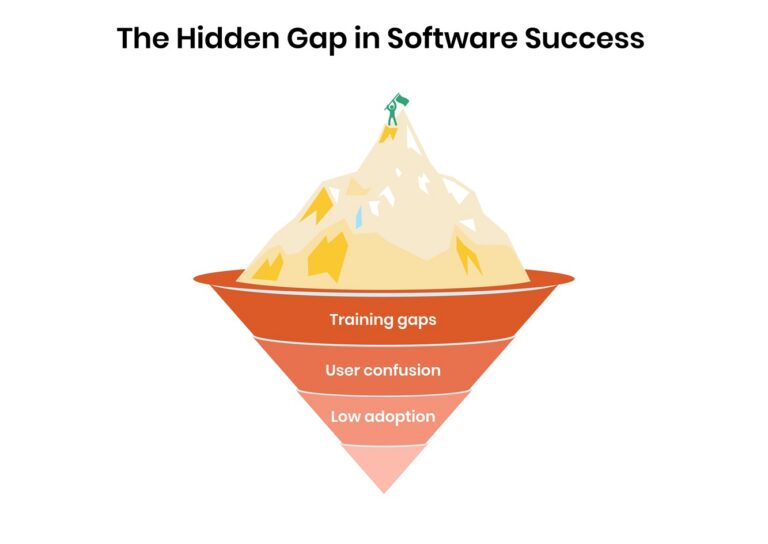
A lot of software businesses have problems convincing users to utilize their new products, even when they spend a lot of money making them.
Enterprise systems such as ERP, CRM, and HCM solutions are quite advanced, but they can also be challenging to use. New users have to learn how to use different business processes, workflows, and system interfaces.
There are a number of reasons why adoption is difficult.
Training Inefficiencies
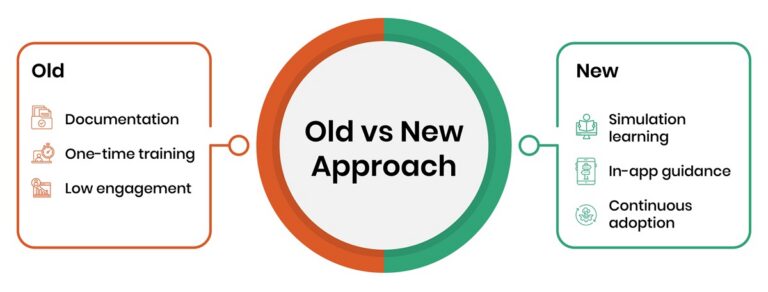
A lot of training programs use generic resources like documents, webinars, or films that don’t change. These resources talk about how the system works, but they don’t usually provide you hands-on experience.
Users have a hard time doing practical activities without hands-on instruction.
System Complexity
Enterprise systems usually have a lot of different modules and workflows. For instance:
- ERP systems manage finance, procurement, and supply chain processes
- CRM platforms track customer interactions and sales pipelines
- HCM systems support HR operations and workforce management
New users may feel overwhelmed when navigating these environments.
Resistance to Change
People generally like to work in ways that are familiar to them. When new software replaces outdated systems, workers could still use spreadsheets or other manual workarounds.
Without the right help and training, adoption slows down a lot.
Common Adoption Challenges
- Long learning curves for new users
- Low engagement with training materials
- Increased support requests from confused users
- Limited use of advanced system features
These challenges highlight why software providers must prioritize adoption strategies alongside product development.
Key Benefits of a Digital Adoption Strategy
Companies that use effective digital adoption methods realize real gains in training, productivity, and how well their operations run.
One big plus is that onboarding goes faster. Employees can learn about system workflows rapidly and start contributing sooner when they have structured learning experiences.
Learning by doing also makes people more interested. Users don’t just passively view training films; they do tasks in realistic settings. This hands-on method boosts confidence and helps people remember what they learn.
Another advantage is reduced operational cost. When users understand system processes, they rely less on IT support teams. Fewer mistakes and fewer help desk requests reduce operational overhead.
Digital adoption also strengthens return on investment. Organizations invest heavily in enterprise software expecting productivity gains. Strong adoption ensures that employees actually use system features that deliver those benefits.
Business Impact of Digital Adoption
Benefit | Business Outcome |
Faster onboarding | Employees reach productivity sooner |
Higher engagement | Users feel confident navigating systems |
Reduced support requests | Lower dependency on IT help desks |
Improved ROI | Organizations realize faster value from software investments |
When users adopt systems successfully, organizations unlock the full potential of their technology investments.
The Role of Assima Train in Driving Digital Adoption
Assima Train is a key tool for businesses that want to get more people to use their corporate software.
The platform creates simulations to mimic real applications by cloning them rather than using screenshots like traditional e-learning tools. Users can safely practice workflows in a safe environment before using the production system.
This method lets workers learn by doing instead of just reading about them or watching a video.
For instance, a new employee who is going to use an ERP system can practice inputting transactions or finishing approval workflows in a virtual environment before doing them in the real system.
Assima also helps you understand how to use apps in in the live application. While users do activities, step-by-step instructions show up to help them finish workflows correctly using Assima In-App Search.
This assistance works like real-time help, which cuts down on mistakes and misunderstanding.
Scalability is another key feature. Many times, big companies have to teach thousands of workers in different languages and areas. Assima Train makes it easier to standardize learning experiences around the world by supporting multilingual training delivery.
The platform supports many enterprise systems, including:
- SAP enterprise platforms
- Workday human capital management systems
- Oracle enterprise applications
Outcomes Organizations Achieve with Assima Train
- Faster user onboarding for enterprise software platforms
- Reduced support requests from employees
- Improved user confidence and system engagement
- Faster adoption during system rollouts and upgrades
By combining simulations, guidance, and scalable learning tools, Assima Train helps organizations accelerate digital adoption across enterprise platforms.
Ultimo reduced its onboarding time 50 Days to 40 Days: What Changed?
Steps to Building an Effective Digital Adoption Strategy
Organizations can follow several key steps to develop a strong digital adoption strategy.
The first step is identifying user challenges. Organizations should gather feedback from employees to understand where users struggle within the system.
Common issues may include navigation difficulties, complex workflows, or unclear procedures.
The next step involves embedding training within daily workflows. Instead of relying only on external documentation, organizations should provide role-based simulations and contextual guidance that support users during real tasks.
Measurement is another important element. Organizations should track adoption metrics to evaluate whether training programs are effective.
Key Metrics to Monitor
- User adoption rates
- Time required for onboarding new employees
- Number of support tickets related to system usage
- Productivity improvements across teams
By tracking these indicators, organizations can refine training strategies and continuously improve user adoption.
Conclusion
The first stage in digital transformation is to use enterprise software. Users must be able to utilize the system confidently and follow the right workflows for it to have real business benefit.
Even the best platforms may not be used enough if they don’t have good adoption tactics.
A structured digital adoption strategy helps bridge the gap between utilizing software and using it well. Companies may get the most out of their technology investments and enhance productivity by letting people learn by doing and giving them coaching that is based on real-life situations.
Assima Train and other solutions make this feasible by allowing learning through simulations, training programs that can grow, and real-time workflow guidance.
Software companies that focus on getting people to use their products more quickly and effectively have a distinct edge over their competitors.