

Key Highlights
- Boost software adoption with Assima’s Digital Adoption Platform.
- Understand why strong adoption rates drive productivity and ROI.
- Learn how DAPs provide in-app guidance, simulations, and on-demand help.
- Overcome common user adoption challenges across complex systems.
- Accelerate learning with Assima’s safe, realistic simulations.
Introduction
Enterprises today rely on powerful and complex applications such as SAP, Oracle, Workday, Salesforce, EMRs, and many others. These platforms promise improved efficiency, smoother workflows, and better decision-making. But all this value is only realized when employees understand how to use the software properly. Unfortunately, this is where many organizations struggle.
Traditional training-like classroom sessions, long PDFs, one-time workshops, or static manuals often do not prepare users for real-world tasks. Employees forget what they learned, feel overwhelmed by the system, or hesitate to explore features because they fear breaking something. This slows down work, increases errors, and leads to frustration across teams.
Assima’s Digital Adoption Platform (DAP) helps solve these challenges by giving employees practical, engaging, and easy-to-follow learning experiences. With realistic simulations, step-by-step guidance, and on-demand support, Assima helps users learn faster, avoid mistakes, and feel more confident using new software. As a result, organizations see better productivity, stronger adoption rates, and higher returns on their technology investments.
1. Why Software Adoption Rates Matter
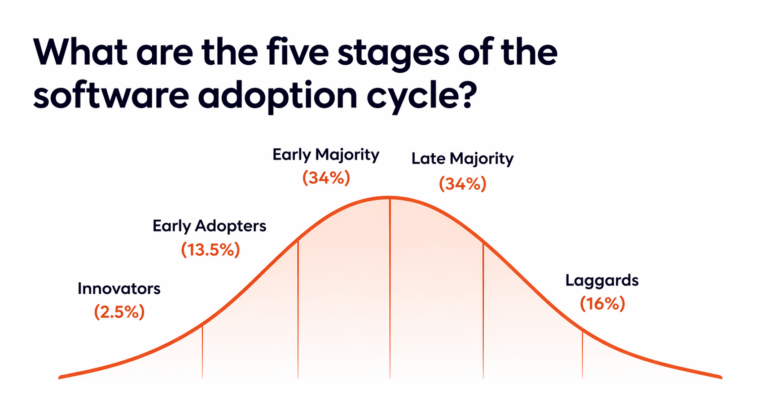
Software adoption is not just about learning about a new system-it directly affects productivity, business outcomes, and ROI. When employees don’t adopt a system properly, several issues arise:
- Work slows down because users are unsure of steps
- Errors increase and affect data quality
- IT support is overwhelmed with basic queries
- Employees revert to old habits or manual workarounds
- Transformation initiatives take longer or fail
Research shows that many digital transformation projects fail not because of the software, but because employees do not adopt it effectively. This often happens when training is rushed, too generic, or doesn’t give users enough hands-on practice.
On the other hand, when adoption rates are high, employees’ complete tasks faster, make fewer mistakes, and follow standard processes more consistently. Teams feel more confident, and organizations unlock the full benefits of their software investments. Higher adoption also reduces support costs because users rely less on IT for basic guidance.
In short, strong software adoption ensures smoother operations, better accuracy, and long-term success for enterprise systems. This makes solutions like Assima essential for modern businesses
2. What Is a Digital Adoption Platform (DAP)?
A Digital Adoption Platform (DAP) is a tool designed to help employees learn and use software more effectively. Instead of relying on long training sessions or external documents, a DAP brings guidance directly inside the application where the user is working.
Key features of a DAP include:
This gives step-by-step instructions on the screen, helping users complete tasks correctly even if they are new to the system.
Simulations
Simulations allow employees to practice in a risk-free environment that looks exactly like the live system. They can repeat steps as many times as needed without affecting real data.
On-demand help
Users can access support instantly whenever they feel stuck, instead of waiting for IT assistance or browsing through manuals.
Process reinforcement
A DAP provides reminders, tips, and prompts that help users build habits and retain what they learn.
Because enterprise systems are updated frequently, a DAP ensures that training stays relevant, consistent, and aligned with real workflows. It supports users continuously-not just during onboarding.
3. Major User Adoption Challenges Enterprises Face
Enterprises of all sizes face similar difficulties when rolling out new software:
Complex Interfaces
Systems like SAP and Oracle are powerful but complicated. Users often feel overwhelmed because they must navigate many screens, menus, and fields.
Forgetting Training Quickly
Traditional training usually happens in a single session. By the time employees need to use the system, they have already forgotten the steps.
Fear of Making Mistakes
Live systems contain real data. Many employees avoid exploring the system because they worry, they might break something or enter incorrect information.
Ineffective Traditional Training
Classroom training, manuals, and static guides are not interactive. They don’t match how people actually learn or remember information.
Multilingual & Global Teams
Large organizations often operate across countries. Creating standardized training for different languages and roles is difficult without the right tools.
All these challenges lead to slower adoption, more errors, higher support costs, and lower employee confidence. Organizations need a better approach-something more modern, practical, and easy to scale.
4. How Assima’s DAP Improves Software Adoption Rates
4.1 Simulation-Based Learning
Assima creates a realistic, editable replica of your enterprise applications without using live data. This unique simulation technology allows employees to practice tasks repeatedly in a safe environment. They can learn by doing, making mistakes, and trying again without affecting real operations.
This builds confidence, improves retention, and prepares employees to handle real system tasks with ease. Simulations are especially useful for SAP, Oracle, CRM, EMR, and other complex platforms where hands-on practice is critical.
4.2 Real-Time In-App Guidance
Assima overlays step-by-step instructions directly on the application interface. When users are unsure about the next step, the system guides them instantly. This reduces confusion, prevents errors, and ensures accuracy in daily tasks. It also cuts down on IT support tickets because users receive help exactly when they need it.
4.3 Scalable Training for Global Teams
Assima supports multiple languages and allows organizations to deliver consistent training across regions. Whether your workforce is based in one country or worldwide, everyone receives the same high-quality guidance. This is crucial for maintaining standard processes and ensuring global compliance.
4.4 Analytics to Measure Adoption
Assima includes powerful analytics that show where users struggle, which steps take more time, and which tasks need more training. These insights help organizations improve workflows, update training content, and support continuous improvement. Instead of guessing where adoption is weak, leaders can make data-driven decisions.
5. Why Assima Train Outperforms Traditional Training
Traditional training methods often fail because they provide information, not experience. Employees may listen to a lecture or read a manual, but they do not get enough hands-on practice. Live system training is risky, slow, and limited.
Assima Train solves these issues by offering simulations, interactive content, and contextual help. Users learn by doing it, not by reading. They can practice until they feel comfortable, receive support instantly, and avoid making mistakes in live systems.
This leads to stronger retention, faster onboarding, and more confident users-something traditional training cannot achieve.
6. Best Practices for Boosting User Adoption with DAPs
To get the most value from a DAP like Assima, organizations should:
- Train users based on real workflows
- Reinforce learning before, during, and after go-live
- Encourage practice through simulations
- Use analytics to improve training
- Offer multilingual and role-based content
- Continuously update guidance as systems evolve
These practices help employees stay confident, accurate, and productive.
Conclusion
Software adoption plays a major role in the success of digital transformation. When users understand systems deeply, they work faster, make fewer mistakes, and follow standard processes with ease. Assima’s Digital Adoption Platform helps organizations achieve these goals with realistic simulations, in-app guidance, continuous support, and powerful analytics.
By empowering employees to learn smarter and perform better, Assima enables enterprises to unlock the full potential of their software investments.