

Introduction
Key Highlights
- Regulated industries require employees to follow strict compliance procedures with complete accuracy.
- Traditional compliance training often fails because employees cannot safely practice real workflows.
- Simulation-based training improves audit readiness by allowing employees to practice compliance tasks in realistic environments.
- Hands-on simulations reduce audit errors, improve confidence, and standardize training across global teams.
- Assima Train supports compliance readiness with guided simulations, multilingual delivery, and training analytics.
Assima Train and other platforms let businesses offer interactive, hands-on compliance training that gets staff ready for real system procedures.
Why Compliance Training Matters in Regulated Industries
Government agencies and regulatory entities keep a close eye on regulated industry. Companies need to show that their personnel always follow written rules.
Some industries that depend on compliance training a lot are:
- Healthcare and medical services
- Pharmaceutical manufacturing
- Financial services and banking
- Industrial and manufacturing operations
These sectors must meet strict regulatory standards to ensure safety, accuracy, and accountability.
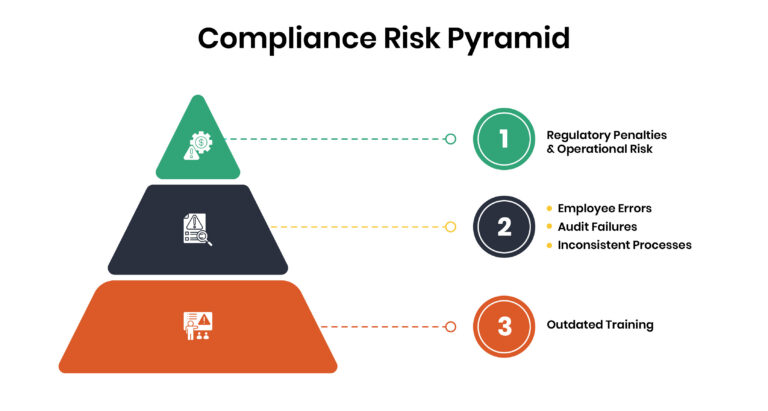
When compliance procedures are not followed correctly, organizations face significant risks.
Risks of Poor Compliance Training
- Fines and penalties from the law
Breaking the rules can lead to fines and other legal problems.
- Operational disruptions
In the worst circumstances, regulators may stop operations until compliance problems are fixed.
- Audit failures
During audits, businesses must show that they are following procedures correctly and consistently.
- Reputational damage
Failure to follow rules can hurt an organization’s credibility and trust in the public.
Audits make sure that workers follow the rules exactly as they are written. Even simple changes to how the system works can make compliance a problem.
Because of this, businesses need to make sure that their workers know the rules and how to follow them correctly in enterprise systems.
Challenges with Traditional Compliance Training
A number of businesses still teach compliance procedures in old-fashioned ways, like through manuals, presentations, and taped sessions. These tactics provide workers the information they need, but they don’t necessarily prepare them for real job. This means that workers might know the theory but have problems using procedures in practical situations.
Some of the most common challenges include:
- Low knowledge retention
You don’t have to actively participate in passive training approaches like presentations or recorded films. Employees may get the material during training sessions, but they often forget critical procedures when they have to do jobs later.
- Lack of safe practice environments
Employees in regulated businesses are not allowed to try things out in live systems. Mistakes in production contexts might mess up financial records, patient records, or regulatory paperwork, which makes practice dangerous.
- Training content becomes outdated quickly
Rules change all the time, and businesses need to keep their procedures up to date. It might be hard to keep training materials up to date for all teams and departments.
- Inconsistent training across global teams
Big companies do business in many different places and languages. Employees may get various instructions based on where they work or what department they’re in if there aren’t uniform training programs.
These challenges highlight the need for training methods that combine accuracy, consistency, and practical experience.
What Is Simulation-Based Compliance Training?
Simulation-based compliance training allows employees to learn by performing tasks in realistic system environments.
Instead of reading instructions or watching demonstrations, users interact directly with simulated versions of the software they use in daily operations. These environments replicate real system interfaces and workflows without affecting production data.
Employees can therefore practice compliance procedures step by step while receiving guidance during the process.
How Simulation-Based Compliance Training Works
- Employees interact with realistic simulated systems
- Training replicates real workflows used in daily operations
- Users perform tasks step by step in a safe environment
- Mistakes occur without affecting operational data
This approach strengthens learning through experience. When employees perform tasks repeatedly, they develop familiarity with system workflows and regulatory procedures.
Simulation training also helps build muscle memory. Employees remember actions they practice regularly, which improves performance during real operational tasks and audits.
By allowing employees to practice safely, simulation-based compliance training reduces risk while improving procedural accuracy.

Benefits of Simulation-Based Training in Regulated Industries
Simulation-based training offers several advantages for organizations operating in regulated environments.
One of the best things about it is that it makes procedures more accurate. Employees get better at following the rules when they practice compliance workflows over and over. This planning makes it less likely that mistakes will happen during audits and regulatory reporting.
Another benefit is that users will feel more confident. When working with complicated systems, employees often don’t know what to do when it comes to compliance. They can learn without worrying about making mistakes in simulation environments.
Standardized training delivery is also good for businesses. Simulation programs can provide uniform training experiences across teams, departments, and international locations.
Employees can practice frequently without affecting operational systems. Because simulations operate independently from production environments, training can occur anytime without system downtime.
Key Benefits of Simulation-Based Compliance Training
Benefit | Impact on Organizations |
Reduced audit errors | Employees follow procedures more accurately |
Improved confidence | Users become comfortable performing regulated tasks |
Standardized global training | Consistent training across locations and departments |
Continuous practice | Employees reinforce skills without affecting live systems |
These advantages help organizations strengthen compliance readiness while improving operational efficiency.
How Assima Train Supports Compliance and Audit Readiness
Assima Train enables enterprises to implement simulation-based compliance training across complex enterprise systems.
The platform makes very realistic simulations that are like genuine application environments. These simulations work the same way as real production systems for employees. This lets users practice workflows securely while yet getting the job done right.
Users get help with training from step-by-step instructions. During jobs, contextual tips show up to make sure that workers follow the right steps. This advice helps users comprehend both the order of the steps and why they are being taken.
The platform’s ability to work in several languages is helpful for businesses around the world. Companies can offer the same training experiences in different areas and support different languages at the same time.
Assima Train also gives companies analytics that assist them figure out how well their training is working. Training managers may see how well users are doing, find out what they don’t know, and see if they are ready to do compliance-related duties.
The capacity to quickly change training information is another crucial skill. Organizations can adjust simulations to meet new rules or changes in their own practices.
Key Outcomes with Assima Train
- Lower compliance-related error rates
- Faster employee onboarding
- Improved audit readiness
- Reduced operational risk
- Consistent training across global teams
Through these capabilities, Assima Train helps organizations move from reactive compliance management to proactive training strategies.
See how regulated enterprises improve audit readiness with simulation-based compliance training.
Best Practices for Implementing Simulation-Based Compliance Training
Companies that use simulation-based training should make sure that their learning programs are very similar to how things work in the real world. When training is like the real work that employees do every day, they can use what they learn right away and feel more sure about how to do things.
Some important things to do are:
- Align training with real operational workflows
Make simulations that show exactly what employees do every day at work. This makes sure that what you learn can be used in the actual world.
- Focus on high-risk compliance tasks
Include important tasks like safety inspections, regulatory reporting, and financial documentation in training scenarios on a regular basis. These locations have a higher chance of not following the rules and need particular support.
- Use scenario-based simulations
Make training activities based on real-life circumstances that employees face while working. Scenario-based learning helps people see how procedures work in real life.
- Validate knowledge through assessments
Add quizzes, workflow exercises, or real-world tests to make sure that workers know how to follow the rules and can do it correctly.
- Leverage training analytics for improvement
Check the training and performance data of users to find out where they need to learn more. Analytics can show whether people or processes require more training or support.
Following these steps will help businesses build a culture of continuous learning where staff consistently practice compliance procedures, which will improve accuracy and audit readiness over time.
Industry Use Cases
Many regulated industries can benefit from compliance training that uses simulations.
Healthcare organizations utilize simulations to teach their workers how to use electronic health records and keep patient data private.
Banks and other financial institutions use simulation training to keep an eye on transactions, make sure reports are correct, and get ready for regulatory audits.
Companies that make things employ simulations to practice quality control and safety checks.
Simulation training is also helpful for firms in the public sector. Before they accomplish their jobs in real life, government workers can practice regulatory documentation workflows and administrative tasks.
Simulation-based training gives workers a safe place to practice tasks that are important for following the rules in all kinds of businesses.
Conclusion
Companies that work in regulated areas must get compliance training. Employees need to know how to follow procedures properly and do them correctly in digital systems.
Traditional training approaches typically teach employees about things in theory, but they don’t let them practice real processes. Simulation-based compliance training solves this problem by letting staff learn in a safe, hands-on way.
Assima Train and other platforms allow businesses create training programs that can be scaled up to improve audit readiness and compliance performance.
Businesses can lower their operational risk, enhance accuracy, and establish stronger regulatory compliance across teams by using simulation-based compliance training.