


Introduction
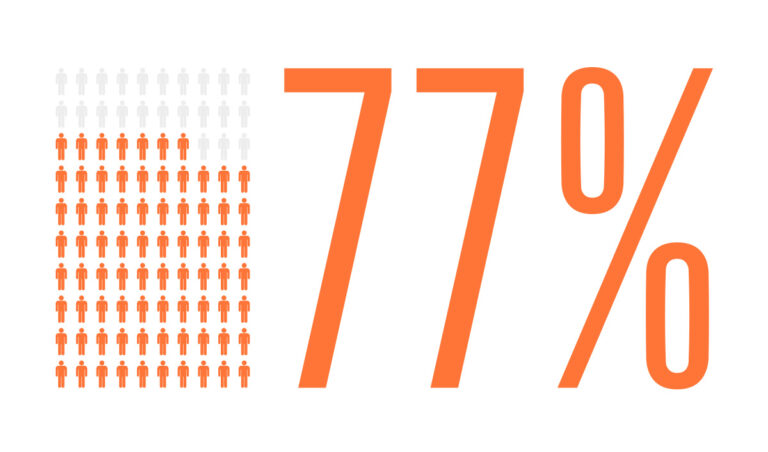
Way too many offices make fatal errors when it comes to employee onboarding. They believe only the new recruit must make a great first impression, but it applies the other way around too. A new employee who does not feel excited to work at your office from Day 1 is only gearing up for disappointment till their last day there, which could be soon if you don’t amp things up fast enough. After all, 77% of new employees believe onboarding to be vital in their decision to stay with a company long-term.
How you onboard your new hires will set the tone for their attitude towards work for the entirety of their tenure. A poor experience will elicit subpar engagement in the business – a training and orientation program that fails to explain workplace operations and dynamics sufficiently, misses out on key elements, or tries to replace one with the other will inevitably create confusion, fear, and disinterest.
One of the primary factors in the process is undoubtedly the use of a suitable onboarding solution. While many would not be too keen to use digital onboarding tools out of fear that they will under-demonstrate the essence of the business and the workplace, they have undeniably become indispensable nowadays. The right platform could be the key to successful retention and employee loyalty. A tool like Assima will be your lifesaver in ensuring a streamlined onboarding experience for your employees. Assima helps you tackle the common issues most digital onboarding tools face and resolve them without breaking a sweat!
Find out an expert’s opinion on why it is essential to get onboarding and orientation right in the workplace.
Reasons Why Your Digital Onboarding Tools are Underperforming
Traditional SAP training methods are not equipped to handle the moderThere are many different causes for the L&D department at your company to be facing enterprise onboarding challenges. However, we can compact them into five core blockers that generally cover the crux of the entire problem: n training needs of enterprises. Some of their shortcomings include:
Lack of Real-World Learning Experiences
Onboarding in the digital era undoubtedly needs digital onboarding tools, yet many organizations fail to understand that. They stick to outdated and hence, ineffective onboarding tools, employing passive, one-directional content like videos, PDFs, slides, etc. These resources are unable to capture the interactivity of modern software accurately, and hence, fail to add any real-world learning value to the training process.
Such training tools could result in a lack of engagement among learners, so that when they become users, they either fail to retain and recall what they learned or are unable to effectively apply them in real-life scenarios. Moreover, the fact that these tools do not create a seamless connection between knowledge consumption and application means that users have to go back and forth between the live system and the training resource to corroborate facts, resulting in attention disruption and break of flow.
Solution
Simulation-based training provided by Assima Train is the perfect example of a solution that overcomes this challenge. These hyper-realistic simulations provide the perfect scenario-based learning experience to tackle issues in the live system while giving a chance to practice confidently and learn from mistakes in a safe environment. By the time employees start working on the live system, they are ready to take on any real-world challenge.
One-Size-Fits-All Training Content
Another major digital employee onboarding issue is the lack of personalization in learning content and delivery. Enterprises often make the mistake of creating a rigid syllabus for employee training that is not tailored to their specific requirements based on role, responsibilities, location, software usage, or any other differentiating factor. Such an umbrella approach results in two problems down the line.
The first is that many employees will end up gaining knowledge that they have absolutely no use for in the field, making them disinterested in learning attentively. They will always wonder if what they are learning is relevant, causing them to be nonchalant and dismissive throughout training. Second, some employees will not receive the kind of niche training they need for their specialized roles in the company, resulting in gaps in their knowledge. Moreover, if distinctions are not made based on region-specific or software version-specific differences, it could lead to errors and compliance issues.
Solution
The digital onboarding tools you use must have the capability to provide adaptable, personalized learning paths that take into account a learner’s preferences, progress, needs, role, software version, and location to ensure targeted training. Assima Train simulations allow you to create customized lessons with various datasets, and they allow branching scenarios based on your actions. Assima In-App Search provides contextual information in the live system based on your role and current task. Every trainee learns in the most optimized manner for their needs.
No Real-Time Support or Guidance
Failed employee onboarding is not just due to deficiencies in pre-usage training but also due to a lack of support during live usage. New users often get stuck in workflows with doubts and errors due to a lack of immediate guidance at the point of need. Errors could lead to operations being held up or compliance rules being breached.
Moreover, it could generate a higher volume of support tickets and helpdesk queries, burdening IT more than ever right after a software rollout when they are already busy. Workflow delays would lead to frustration and fatigue at every level of operations, causing productivity and efficiency to take a critical hit.
Solution
The best way to counteract this issue is to utilize just-in-time digital onboarding tools. Assima In-App Search is, as the name suggests, an in-app search widget that overlays the live application and provides contextual information to the user at the point of need. It connects to the entire knowledgebase and facilitates self-service for users in doubt at the right place and time.
Low User Engagement & Feedback Mechanisms
One of the most prevalent onboarding software problems includes the lack of an interactive, hands-on learning approach that lowers engagement and can even result in premature drop-off. Traditional onboarding tools are usually too one-dimensional to elicit the kind of feedback loop that encourages active learning and allows users to learn from their mistakes without risking the live system.
Not only that but there is also a lack of real-time progress tracking that helps you get visibility into learner performance and assess the effectiveness of the training program. As a result, you have no way to ascertain which learners need extra support or how to effect onboarding tool improvement. It completely eliminates any chance of optimization of the learning experience you provide to your employees.
Solution
The best solution is to employ a tracking-oriented, results-driven digital onboarding platform like Assima. Assima’s training approach is guided by a learning-by-doing methodology that gives users a safe environment to practice and learn from mistakes without any risks. Its analytics dashboard also provides real-time reports and insights into how learners as well as the training program are faring for 360° visibility.
Inflexible and Hard-to-Scale Solutions
A global enterprise runs operations across multiple locations, with diverse teams and roles. This demands a need for digital onboarding tools that can be scaled and adapted to the varying needs of your employees. The number one failure is the lack of multilingual readiness to cater to the linguistic needs of a distributed workforce. Without the ability to localize learning content, your training would be ineffective for the majority of your employees.
Scalability and adaptability are the two next important requirements. If your training system cannot scale with your business, it will consume unnecessary resources and reduce ROI. It must also be flexible and customizable enough to fulfill the requirements of diverse roles and teams to prevent redundant training or gaps in knowledge.
Solution
The best solution is to employ a tracking-oriented, results-driven digital onboarding platform like Assima. Assima’s training approach is guided by a learning-by-doing methodology that gives users a safe environment to practice and learn from mistakes without any risks. Its analytics dashboard also provides real-time reports and insights into how learners as well as the training program are faring for 360° visibility.
How Assima Train Fixes These Onboarding Failures
Assima is built to tackle all these common digital onboarding problems in a streamlined manner. Read on to learn how:
Assima Overview
The core of Assima is composed of two tools – Assima Train and In-App Search. Assima Train onboarding utilizes hyper-realistic, interactive simulations for an immersive, hands-on learning experience that promotes engagement and improves retention. Assima In-App Search, on the other hand, provides in-time, in-app informational guidance to support new users on the live system where and how they need it the most.
Features that Resolve Digital Onboarding Issues
What makes Assima the best among existing digital onboarding tools? These features do:
- Hyper-realistic, hands-on simulation training pre-go live for real-world experience in a safe environment before even touching the live system
- Personalized, modular lessons that fit the needs of individual learners and help them train at a pace they are comfortable with
- Lesson versions and datasets that can be created from the same source without re-recording for every new version, ensuring easy maintenance, customization, and updates
- Real-time assistance post-go live to provide just-in-time training on the live system at exactly the point that they need it.
- Centralized tracking with real-time updates and actionable insights for easy optimization of the training program
- Multilingual capabilities with a high level of scalability that allows easy training of a global workforce without any loss in consistency
- Seamless compatibility with company compliance and access management for complete security throughout the training process
Find out how Assima assist in the process of employee onboarding in a streamlined manner.
Use cases
The use case that struggles the most with digital onboarding is remote training. New hire onboarding tools are often built to be supported by instructors or tech experts present at the scene, which is a challenge for remote onboarding. However, Assima is digital-first, replacing the need for such personnel completely. Simulation training with guided practice completely bypasses the need for instructors while in-app guidance provides self-help without IT dependence.
Enterprises often struggle to stay ahead of training with frequent software updates, resulting in inconsistencies and delays. However, Assima’s 4X patented object-based cloning technology ensures easy maintenance, quick updates, and sustainable lesson version control. Along with centralized content library management, this creates the level of scalability that global enterprise training demands.
Multilingual training is also a common blocker for global enterprises when it comes to digital adoption. Many training programs fail simply due to language barriers, which translates to serious knowledge gaps and errors in the field. Assima’s built-in multilingual functionalities allow lessons to be translated to any language with ease, ensuring consistent quality of training for employees in any part of the world.
Transition to Best Practices
Applying the best practices for digital onboarding for your industry coupled with the right digital onboarding tools can create the ideal training system for your workforce. Here are some top suggestions:
- Thoroughly test your digital onboarding solution, along with mandatory UAT surveys, to ensure that it aligns with the needs of your business as well as your workforce.
- Set SMART goals when setting the success parameters of your onboarding program.
- Employ both internal SMEs and external consultants for an exhaustive perspective on the best way to onboard your employees.
- Do not just take your current requirements into account; weigh your future needs as well when building your onboarding program.
- Utilize a continuous learning approach for constant improvement in the digital adoption and usage metrics among your employees.
- Track the performance of your learners and evaluate your onboarding process constantly to ensure optimization with evolving needs and preferences.
Conclusion
The digital onboarding experience you provide your employees is responsible in deciding whether they have a good adoption experience or are scared to use new technology. It can be the difference between good retention and high turnover. Only with the right digital onboarding tools can you guarantee a workforce that is not resistant to enthusiastically adopting and using new software. Interactive, scalable solutions like Assima are the future for creating a positive digital adoption experience and ensuring efficient, tech-savvy employees.
Are you onboarding your employees the right way? Or are you falling behind your competitors? Find out now.
Frequently Asked Questions
Let’s Answer Some of Your Questions.
Too often, enterprises rely too much on outdated onboarding tools and training methods, choose an unsuitable platform for their use case, underutilize the features and functionalities of the platform they have, or do not upgrade their training system with evolving needs. This results in their digital onboarding tools underperforming.
Onboarding tools help familiarize users with new or updated software applications and learn to use them like an expert. They instill in users the skills and confidence needed to take on daily operations by leveraging the software in their hands to the fullest.
Choosing an onboarding tool that does not suit either the business needs of the company or the learning needs of the workforce is the biggest mistake in enterprise onboarding. Even if you do everything else right, this mistake can undo all of that and result in serious onboarding failure.
Assima is built using a 4X patented cloning technology that targets the exact challenges enterprises face during onboarding. Simulation training ensures hands-on training and engagement, in-app guidance provides support on the live system, the analytics dashboard helps you track the program, and multilingual and scalability features ensure consistent onboarding experiences across teams and locations.
Assima can be deployed remotely with ease. It is highly compatible with any system and can be deployed via any OS or browser. You can have as many administrators and users as you want. All you need is a suitable terminal and an internet connection, and you can be set up in any part of the world. Multilingual capabilities ensure that you can train people anywhere in the world with ease.