

Key Highlights
- When users can simulate real-world FI/CO procedures prior to working in production, SAP finance training is most effective.
- Conventional approaches, such lectures, films, and PDFs, describe procedures but frequently fail to foster real-world confidence.
- Simulation-based learning facilitates more seamless month-end close operations, enhances onboarding, and lowers posting errors.
- SAP adoption among finance teams can be greatly increased with a contemporary training approach that incorporates role-based learning, continual enablement, and simulations.
Introduction
As companies employ SAP S/4HANA Finance, this difficulty has grown even more important since users must quickly adjust to new interfaces, changing workflows, and frequent upgrades. Organizations will be able to reap the full benefits of their SAP investment sooner if they can increase user confidence.
Simulation-based SAP finance training is unique in this regard. Finance professionals can perform routine procedures in a secure and risk-free environment by using simulations that replicate realistic SAP environments. Before working in production, employees gain confidence, learn by doing, and make mistakes without facing repercussions.
What is SAP Training?
Employees who receive SAP finance training are better prepared to handle financial tasks within SAP systems. It allows users to conduct daily accounting tasks while upholding compliance and data integrity by covering essential finance processes like SAP Financial Accounting (FI), Controlling (CO), and SAP S/4HANA Finance. Depending on an employee’s position, training could involve activities like:
- Posting journal entries
- Processing vendor and customer invoices
- Managing accounts payable and receivable
- Performing bank reconciliations
- Executing payment runs
- Managing fixed assets
- Monitoring cost centers and internal orders
- Supporting month-end and year-end financial close
Even minor errors can result in reconciliation problems, delayed closing cycles, audit findings, or compliance hazards because these actions have a direct impact on financial reporting. Organizations have traditionally used instructor-led workshops, PDFs, recorded demos, or eLearning courses to provide SAP FI and CO training. Although these techniques offer helpful context, they frequently leave workers unprepared for practical implementation.
Making a journal entry in SAP is not the same as reading documentation. Users are not taught how to react when a validation error occurs or a needed field is missing, by watching a video. Employees must precisely complete transactions under tight timelines during crucial finance activities, which highlights the difference between learning and doing.
This problem is addressed by simulation-based learning, which gives staff members the opportunity to practice whole financial operations in a setting that closely resembles the real SAP system. Before working with real-time financial data, users actively carry out procedures rather than merely seeing them, which helps strengthen procedural knowledge, enhance memory, and boost confidence.
Why is SAP Training Different?
End-user training in finance differs significantly from employee training in many other corporate functions. Accuracy is equally as crucial as speed in SAP Finance since every move has an impact on finances, operations, and regulations.
Financial Accuracy Matters
Multiple financial statements, reconciliations, and time-consuming repairs can all be impacted by a single inaccurate posting. Errors in finance can affect reporting accuracy, budgetary choices, and business success, in contrast to errors in less important systems.
Regulatory & Compliance Requirements
Finance teams follow stringent internal governance guidelines, tax laws, and accounting standards. In order to demonstrate compliance during internal and external audits, organizations must keep correct records. SAP users with proper training are less likely to make mistakes that raise audit workloads or cause compliance problems.
Month-End and Year-End Dependencies
Fixed reporting cycles are used in finance operations. Teams are under tremendous time pressure to do reconciliations, post adjustments, and finalize financial statements during month-end, quarter-end, and year-end close. During these times, there is less opportunity for doubt. Instead of learning through trial and error, employees must immediately feel at ease using SAP.
Duty Segregation and Restricted Access
Many SAP Finance users are only authorized to carry out particular tasks within the system. Although these restrictions improve governance, they can also make training more difficult because workers are unable to freely experiment with various workflows in production settings.
This gap can be filled while upholding compliance by offering a secure setting where users can conduct full procedures without sacrificing security.
Unique Challenges of FI/CO Training
System navigation is just one aspect of training SAP FI/CO users. Professionals in finance must manage transactions that immediately affect financial reporting, comprehend intricate procedures, and perform precisely under pressure. During SAP deployments and S/4HANA migrations, these difficulties intensify.
Complex Transactions
SAP Fiori apps and traditional SAP GUI transaction codes are frequently used by finance users. FB50, F-02, F110, FBL1N, FBL5N, MIRO, VF01, and KO88 are examples of frequent transactions. Users need to comprehend the financial impact and business purpose of these transactions in addition to learning about them.
Time Sensitive Processes
There is limited opportunity for learning during month-end, quarter-end, and year-end closings. Before these hectic times, workers must be confident because even minor errors might cause financial reporting to be delayed.
Cross-Functional Procedures
Procurement, sales, inventory, HR, and treasury are all tightly linked to SAP FI/CO. Instead of teaching discrete transactions, effective training should represent these end-to-end business processes.
Limited Practice Opportunities
Sandbox environments can be costly to maintain and challenging to access, whereas direct training in production systems is impractical due to the danger of financial blunders. Before working in the live system, users can practice regularly with simulation-based training, which offers a realistic and risk-free alternative.
See how healthcare organizations are building scalable training programs that accelerate software adoption.
Sandbox Training vs Simulation Training
Sandbox environments are used by many firms to train SAP users, but they can be expensive and resource-intensive to maintain. By offering realistic, practical experience without requiring access to a live or test system, simulation-based training presents a useful substitute.
Criteria | Sandbox Training | Simulation Training |
Production Risk | Low, but incorrect configurations can still affect the environment | None |
Availability | Often shared and limited | Available anytime, anywhere |
Maintenance | Requires regular system refreshes and technical support | Minimal maintenance once simulations are updated |
Cost | Higher due to infrastructure and administration | Lower long-term training costs |
Scalability | Limited by system availability | Easily scales to large, global teams |
Sandbox environments are still helpful for testing intricate configurations and integrations, but they aren’t always the best choice for end-user training. Simulation-based learning provides employees with many opportunities to practice realistic SAP workflows, repeat jobs, and gain confidence without affecting system performance or vying for sandbox access.
Simulation provides an adaptable and affordable solution that enhances current training methods for companies wishing to expand SAP finance training across divisions or geographical areas.
Best Practices for SAP Finance Training
System navigation is only one aspect of a successful SAP finance training program. It equips workers to carry out their responsibilities with assurance in actual business situations. Here are some recommended practices:
Train before go-live – Before users start working in the real SAP environment, provide them practical experience.
Define role-based learning paths – Customize training for managers, controllers, AP/AR teams, accountants, and other finance positions.
Incorporate exception scenarios – Users should be prepared not only for typical workflows but also for common errors, approvals, and uncommon circumstances.
Access proficiency instead of completion – Instead of just having employees complete a course, evaluate their ability to complete jobs.
Update training materials – Update learning resources frequently to take into account new business needs, process modifications, and SAP upgrades.
Organizations can increase user adoption, lower support requirements, and assist finance teams in making the most of their SAP systems by following the above practices.
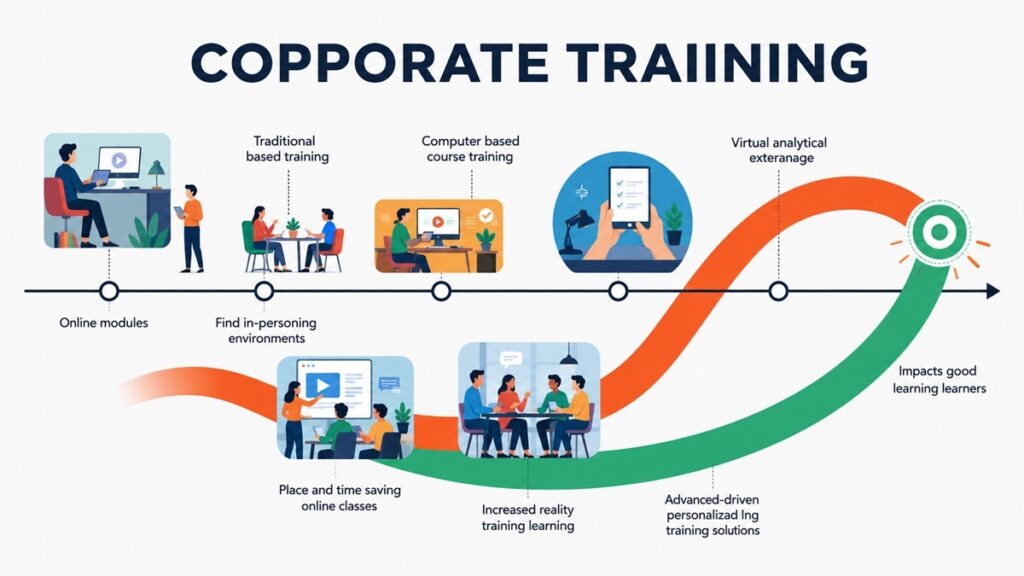
SAP Finance Training's Future
The skills finance teams need to remain productive are evolving along with SAP. The way consumers engage with SAP systems is evolving because to contemporary technologies like SAP Fiori, AI-powered assistants, embedded analytics, and in-app coaching. Organizations are moving away from one-time training sessions and toward ongoing education that helps staff members before to, during, and following system modifications.
This method works well with simulation-based training. Without interfering with daily operations, it allows financial professionals to practice new procedures, adjust to SAP changes, and gain confidence. Organizations may keep people ready as business processes change by using simulations in conjunction with role-based learning and contextual advice.
How Assima Facilitates SAP Finance Enablement?
It takes more than documentation and one-time training to help finance teams become proficient SAP users. Assima facilitates SAP finance enablement and lets staff members practice safely before working in production by enabling businesses to build lifelike software simulations that closely mimic actual SAP environments.
Conclusion
Giving staff members the confidence to carry out financial procedures correctly in practical settings is more important for successful SAP finance training than just teaching them how to use the system. Effective training is essential for lowering errors, increasing user adoption, and facilitating more seamless finance operations as businesses modernize with SAP S/4HANA.
While simulation-based learning closes the gap between theory and practice, traditional training approaches still offer important basic information. Organizations may enhance productivity, lessen the need for continuous assistance, and better prepare their teams for go-live by enabling users to safely perform actual SAP FI/CO operations.