


Key Highlights
- SAP is moving toward real-time decision-making driven by automation and analytics.
- SAP is shifting from systems of records to systems of intelligence with the help of AI embedded capabilities.
- Efficiency is increasing at scale when manual, repetitive SAP procedures are gradually removed.
- Businesses will have a competitive advantage if they can quickly adopt SAP advancements.
Introduction
What does SAP Business AI means?
Artificial Intelligence features that are directly integrated into SAP enterprise applications are referred to as SAP Business AI. These AI systems evaluate enterprise data, automate business processes, and facilitate faster decision-making for employees. Few examples include AI-powered analytics, the Joule AI copilot, and intelligent automation across finance, HR, supply chain and procurement systems.
Artificial Intelligence is strongly shaping enterprise technology. Few businesses are integrating AI into business software as aggressively as SAP. For many years, SAP has been well-known for its enterprise resource planning (ERP) systems that manage core corporate operations such as supply chains, finance, HR and procurement.
Corporations these days are integrating AI directly into daily operations, which changes these systems. SAP is integrating AI into enterprise software as a fundamental component instead of using it as an add-on or experimental tool. But what exactly has changed lately?
More importantly, how does this affect SAP users, employees, and businesses? Now, let’s talk about the latest developments in SAP’s AI strategy and their practical applications.
The Rise of SAP Business AI
SAP’s concept is centered on SAP Business AI. The strategy focuses on integrating AI directly into business applications in order to help users make decisions more quickly, automate tasks, and get insights into company data. This initiative has a huge scope. By 2024, SAP had already delivered over 130 generative AI capabilities across its cloud apps.
These AI features are built into many SAP solutions, including:
- Finance and accounting
- Supply chain management
- Sourcing and selling
- Human resources
- Customer experience tools
The goal is to reduce manual work in everyday business processes. Instead of spending hours analysing reports, employees can rely on AI to complete monotonous administrative tasks in a matter of seconds.
Joule, The SAP’s AI Copilot
Joule, a generative AI assistant, is one of the most significant advancements in SAP’s AI ecosystem, created especially for enterprise tasks. Consider Joule as a business copilot integrated into all SAP programs. It allows users to communicate with it in normal language, just like when speaking with an assistant. For instance, an employee might inquire:
“Who were the best sales managers last month?”
“Why did this quarter’s procurement costs go up?”
“Create an overview of this supplier agreement.”
In the background, Joule analyses enterprise data and provides contextual responses right away. This dramatically simplifies how people interact with enterprise systems. According to the SAP report, Joule can actually speed up decision-making by up to 80% by reducing the procedures needed to acquire analytical insights.
AI Automation that Works Across Processes
SAP is taking things a step further by launching AI agents that are capable of carrying out challenging tasks on their own. The company revealed dozens of specialized AI agents intended to automate business processes at events such as SAP TechEd and SAP Sapphire. These agents can carry out tasks such as:
- Verification of expense reports
- Process automation in procurement sourcing
- Handling HR processes
- Organizing travel and transportation
- Resolving issues with customers
By the end of 2025, SAP targets to deliver over 400 AI use cases throughout its product portfolio, backed by thousands of AI experts. This implies that many operational procedures can be carried out by businesses utilising SAP systems with little assistance from humans.
The Engine Behind the SAP AI Innovation
The AI Foundation serves as the technical foundation and AI operating system for SAP programs. It enables businesses and developers to create, modify, and implement AI models right in SAP systems. Key competencies consist of:
- Support for several models (including OpenAI, Google, and Anthropic)
- Tools for quick optimization
- AI workflow coordination
- Tools for generative AI development
This flexibility guarantees that companies are not restricted to a single AI supplier, which is a significant issue for many organisations implementing AI.
AI Meets Enterprise Data and What it Means for Business
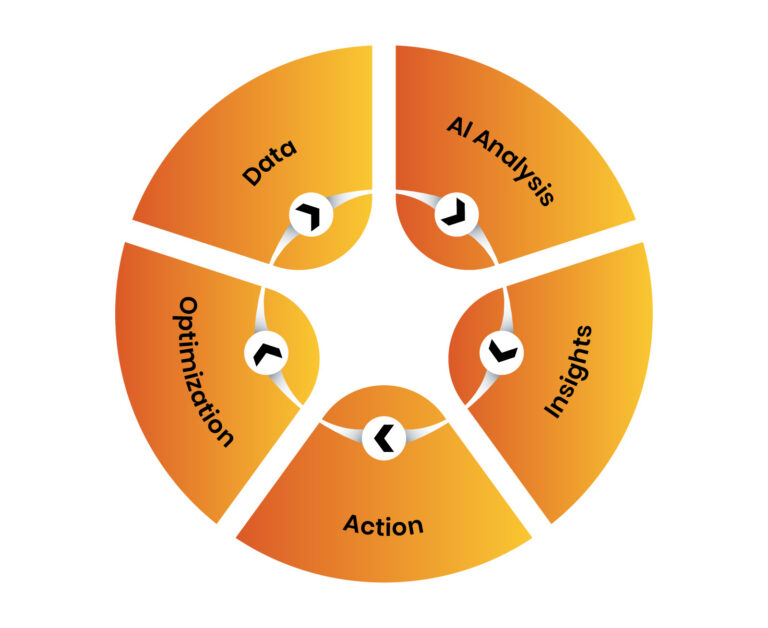
What makes SAP’s AI different from consumer AI tools is its connection to structured business data. Enterprise systems generate massive amounts of operational data, such as financial transactions, supplier records, inventory data, HR records, and more.
SAP estimates that its customers collectively represent over 80% of global commerce activity, meaning an enormous volume of business data flows through SAP systems. When AI can analyse this data in real time, it brings powerful capabilities such as:
- Predicting supply chain disruptions
- Detecting financial anomalies
- Forecasting demand more accurately
- Optimizing workforce planning
In short, AI becomes a decision engine embedded directly into operations. The growing role of AI in SAP systems brings several practical advantages for organisations.
- Faster Decision-Making
AI assistants like Joule can instantly analyse complex datasets and present clear insights. This reduces the time managers spend gathering information.
- Automation of Routine Work
AI agents can handle repetitive administrative tasks such as approvals, document reviews, and reporting.
- Improved Productivity
SAP estimates that AI capabilities can deliver hundreds of millions of euros in value for large enterprises, depending on their scale of operations.
- More Intelligent Workflows
By combining process automation with machine learning, organisations can create workflows that continuously improve.
Some Key Implications for SAP Users
AI is altering how SAP professionals, such as consultants, developers, analysts, and business users, engage with enterprise systems. Here are some significant changes to anticipate:
- Natural Language Communication: Users can express queries in simple terms rather than browsing complicated menus.
- AI-Powered Development: Joule can help developers comprehend code, produce test data, and expedite development activities.
- More Intelligent Adoption and Training: AI-driven guiding solutions facilitate employees’ quicker acquisition of new SAP procedures.
- Put Strategic Work First: Employees can concentrate more on analysis, planning, and decision-making when mundane jobs are automated.
The Future
A SAP’s AI strategy reflects a larger change in business technology. In the past, software required users to navigate intricate systems in order to get data. AI is now changing that paradigm. Software proactively offers insights and actions in place of users looking for solutions. This move could have a significant impact on how enterprise software is developed and utilized in the future.
Hence, AI within SAP is quickly becoming the default interface for enterprise work. SAP is positioning itself at the center of the AI-powered enterprise transformation. The message is clear for organizations already using SAP. it is becoming a core capability of modern business operations. The companies that learn how to leverage these tools effectively will gain faster insights, greater efficiency, and a significant competitive advantage in the years ahead.